Layout Systems

Product Catalog Structural Design

Structuring multidimensional product data into cohesive editorial spreads using modular baseline grids and rigorous typographic hierarchy.

Document Overview

Architectural Blueprint for Complex Merchandise Grids

Managing hundreds of inventory units requires balancing visual breathing room against data density. This project demonstrates how systematic modular units preserve clarity and rhythm across dense catalog spreads.

Editorial Specifications

Layout Discipline
CorelDRAW multipage layout
Systemic Type
Systematic typography
Format Purpose
Brochure layout
Grid Architecture
12-column compound grid with 6-pt modular rows
Baseline Measure
9.5 pt text on 12 pt baseline rhythm
Page Family Scope
64-page industrial hardware catalog
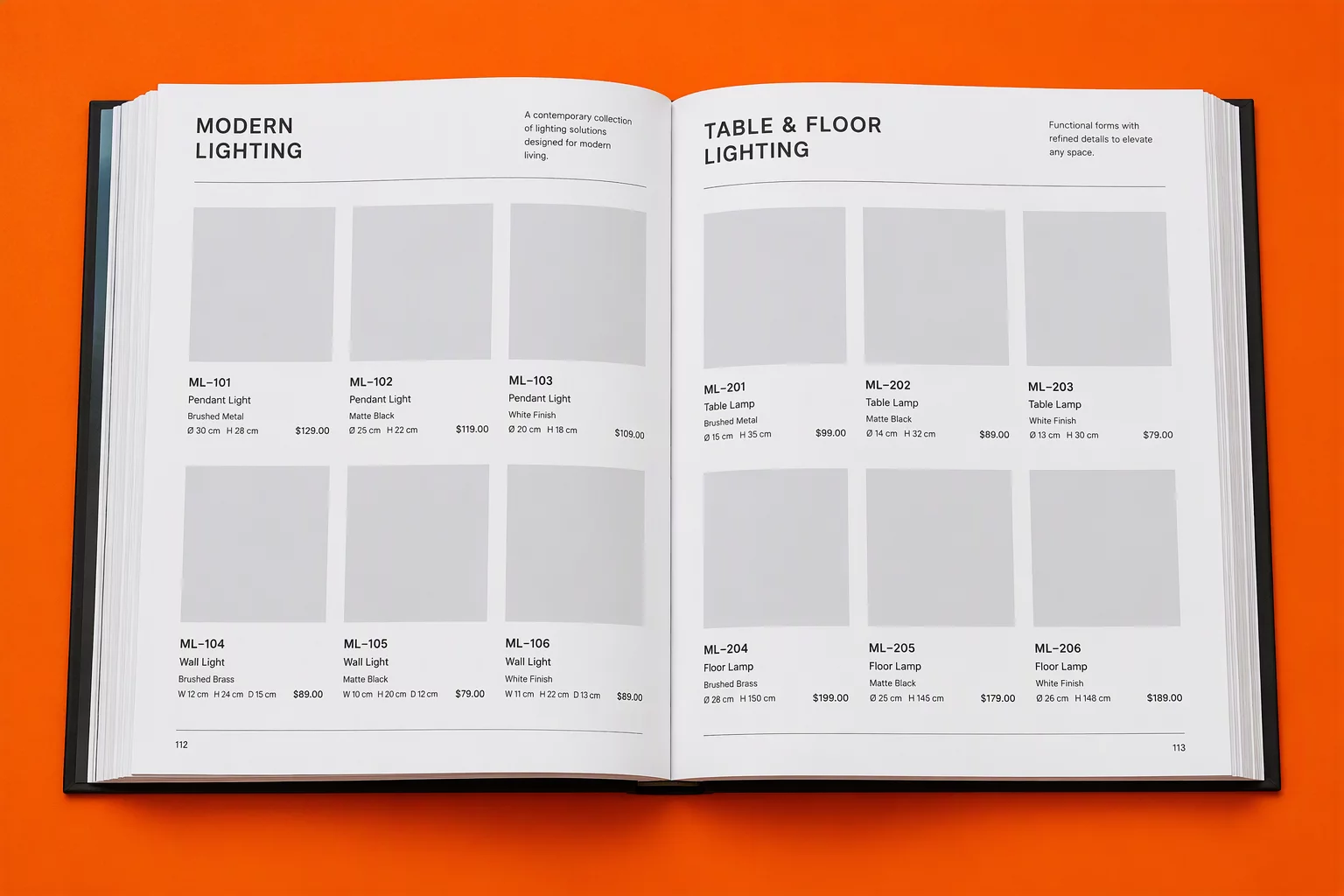
Open product catalog layout highlighting modular grid system and categorized product items
01

Establishing the Modular Base Unit and Column Rules

Designing an extensive product catalog begins not with finished artwork, but with the atomic specifications of a single item cell. When organizing dozens of SKUs across adjacent spreads, varying description lengths threaten visual alignment. By defining a rigid cell container based on a compound 12-column foundation, each product tile receives a predictable proportion regardless of technical data density.

In our CorelDRAW multipage layout workflow, master pages dictate top, bottom, and gutter margins while maintaining mirrored geometry for binding creep. The modular cells snap securely to vertical and horizontal guidelines, keeping product silhouettes and price tags strictly aligned throughout all spreads.

  • Standardized 4-row internal cell padding for visual isolation
  • Dynamic attribute compartments that collapse without shifting neighboring items
  • Fixed thumbnail bounding frames preventing erratic image proportions
02

Managing Data Density with Systematic Typography

Catalog readers do not browse pages like a narrative novel; they scan rapidly for part numbers, dimension tables, and certification badges. Clear typography establishes immediate contrast between bold catalog codes, neutral item descriptions, and highlighted pricing structures.

A catalog without rigid structural hierarchy collapses into visual noise the moment technical specifications exceed three lines.
— David Chen, Lead Publication Architect

Tabular figures ensure vertical alignment across dense spec lists, while custom paragraph styles maintain strict baseline synchronization. Using structured styles within the brochure layout ensures that updates to corporate typography or color codings propagate instantaneously across dozens of working sheets without manual repositioning.

03

Section Pacing and Visual Anchor Points

Monotony quickly fatigues readers navigating extensive multipage publications. Even the cleanest product grid needs periodic interruption to rest the eye and reorient purchasing intent. Introducing intentional pacing transforms raw inventory lists into an engaging catalog experience.

We developed three deliberate pacing instruments to break repetitive catalog blocks at predictable intervals:

  1. Category opening spreads featuring high-impact hero photography and summary taxonomy
  2. Featured product double-width breakout modules disrupting normal column cadence
  3. Footer index ribbons providing rapid thumb navigation across major product groups
Layout Consultation

Plan Your Multipage Catalog Architecture

Consult with our editorial layout specialists on structuring master pages, baseline grids, and high-density product catalogs.